
Wasp, Yellow Jacket & Hornet Control in Queens
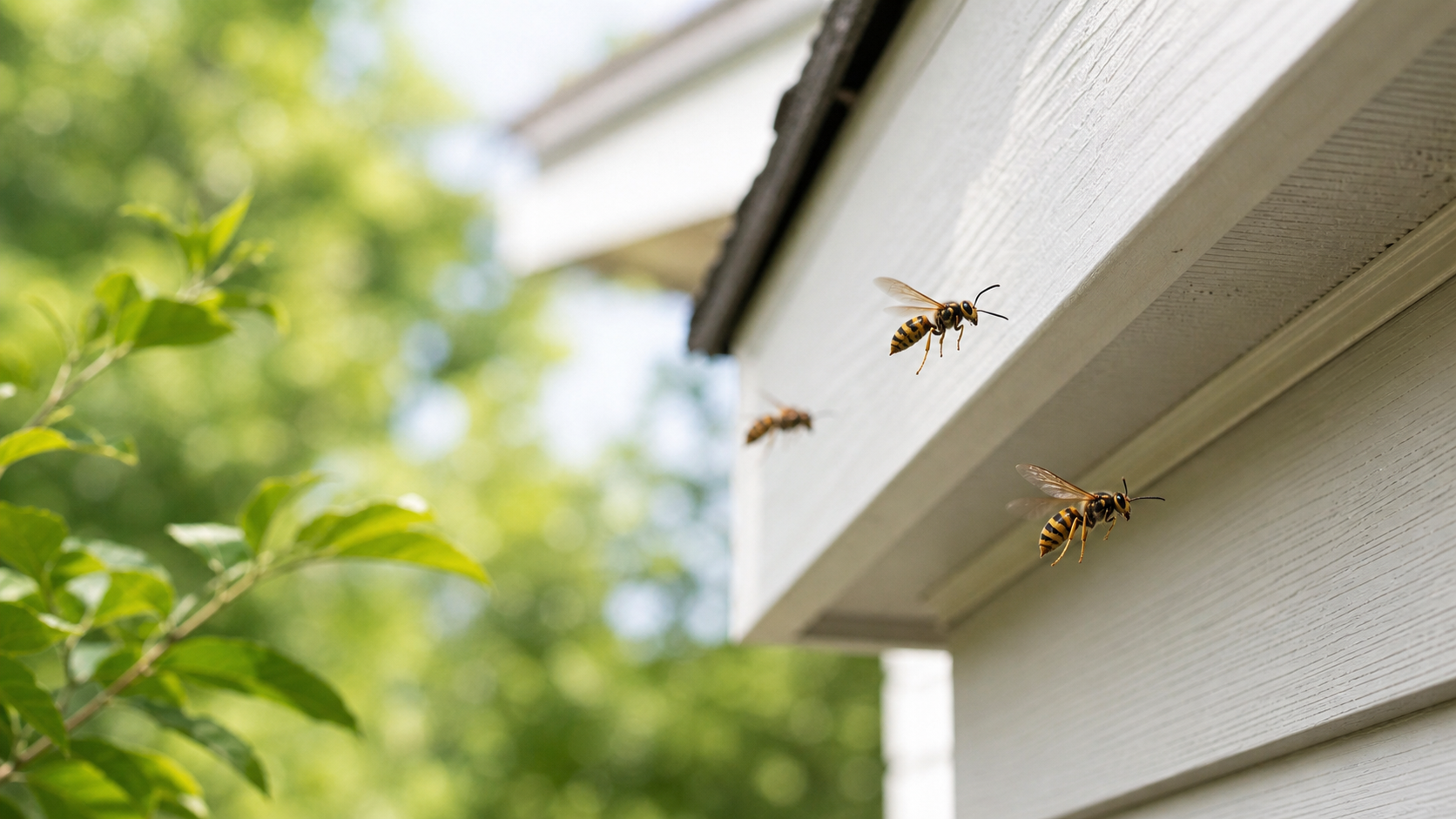
Wasps, yellow jackets, and hornets can create a serious sting risk when nests are located near doors, decks, rooflines, sheds, walkways, or play areas. Repeated insects entering and leaving the same opening may indicate a concealed nest inside a wall or structural void.
Avoid disturbing or attempting to remove an active nest. PestFree4Me begins with an inspection to identify the insect, locate the nest or entry point, and determine an appropriate treatment approach.
Service may include targeted nest or void treatment and accessible nest removal when appropriate. Work is performed from the ground using an extension pole that reaches up to about 20 feet. PestFree4Me does not climb onto roofs or perform roof work.
Found a nest or repeated stinging-insect activity? Call or text Christian directly for an inspection and free estimate. Same-day and next-day appointments may be available—please confirm first.
Common Signs of Flying Stinging Insect Activity
• Wasps or hornets flying around your property
• Insects entering and exiting the same area repeatedly
• Paper nests under eaves, soffits, or decks
• Increased activity around sheds, fences, or bushes
• Ground-level insect activity that may indicate a yellow jacket nest
• Buzzing sounds coming from wall voids or roof areas
Early treatment is recommended before nests continue to grow throughout the season.
Common Flying Stinging Insects We Treat
• Paper Wasps
• Yellow Jackets
• Bald-Faced Hornets
• European Hornets
We inspect the property to identify the species and determine the safest treatment approach.
How PestFree4Me Treats Flying Stinging Insects
1. Thorough Inspection
We inspect the property to locate active nests, identify the insect species, and evaluate the safest treatment method.
2. Targeted Nest Treatment
Professional products are applied directly to active nests and harborage areas to help eliminate the colony while minimizing unnecessary pesticide use.
3. Nest Removal (When Appropriate)
After the colony has been eliminated, accessible nests may be removed when appropriate.
4. Prevention Recommendations
We provide recommendations to help reduce conditions that attract future nesting activity around your home or business.
Every treatment follows Integrated Pest Management (IPM) principles by combining inspection, targeted treatment, and prevention instead of unnecessary spraying.
Why Professional Treatment Works
Attempting to remove or disturb an active nest can increase the risk of multiple stings. Professional treatment helps eliminate the colony safely while reducing the chance of insects returning to the same nesting location.
Our IPM-based approach focuses on treating the source of the problem—not just the insects you see flying around.
Helping Prevent Future Nesting
• Seal openings around siding and soffits
• Repair damaged vents and exterior gaps
• Trim vegetation near the home
• Inspect sheds, decks, and rooflines regularly
• Remove abandoned nests when safe to do so
Why Choose PestFree4Me?
• Licensed & Insured
• Owner-Operated
• NYS Certified Applicator
• Targeted IPM-Based Treatments
• Safe, Professional Nest Treatments
• Residential & Small Business Service
• Same-Day & Next-Day Service Available
Whether you've discovered a nest or noticed increased wasp or hornet activity around your property, PestFree4Me provides targeted treatments designed to eliminate the colony safely and efficiently.
Call or text today for a free estimate and fast response.
Frequently Asked Questions
What types of stinging insects do you treat?
We treat common nuisance species, including paper wasps, yellow jackets, bald-faced hornets, and European hornets.
Is it safe to remove a nest myself?
It is generally not recommended. Disturbing an active nest can cause the insects to become aggressive and increase the risk of multiple stings.
When is the best time to treat a nest?
Treating nests early in the season is often easier because colonies are smaller, but nests can be treated whenever they are active.
Will the insects return after treatment?
Professional treatment eliminates the active colony. While new queens may establish nests elsewhere in future seasons, preventative recommendations can help reduce the likelihood of future nesting.
Can you treat a nest high on a house or roofline?
Treatment is performed from the ground using an extension pole that reaches up to about 20 feet. Accessible nests and entry points may be treated when they can be reached safely; PestFree4Me does not climb onto roofs or perform roof work.
Related Pest Control Services
Explore all Pest Control Solutions, learn about the Home Pest Protection Program, or request a free estimate.